Case Study 3: Gimble Design
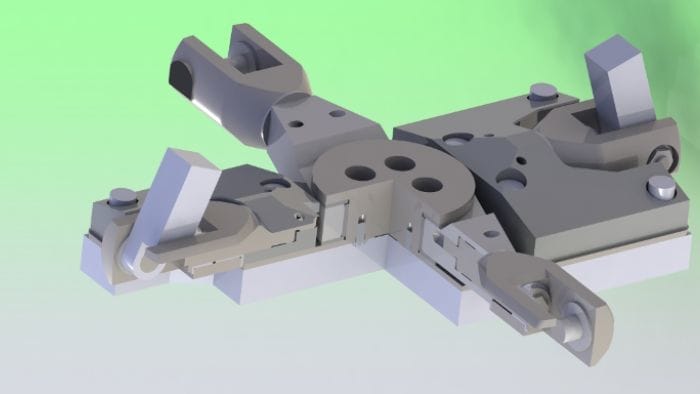
In this case study, we highlight our work on redesigning a gimble assembly for a table joint mechanism, where the primary objective was to improve its capacity to withstand a load of 1600 Nm.
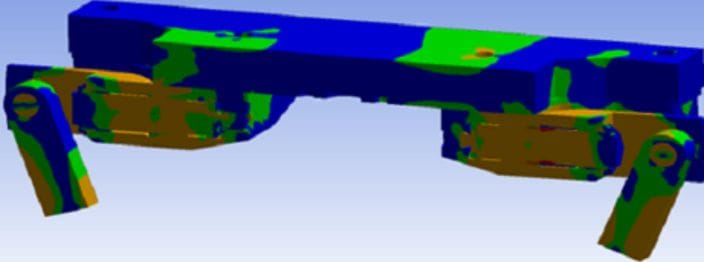
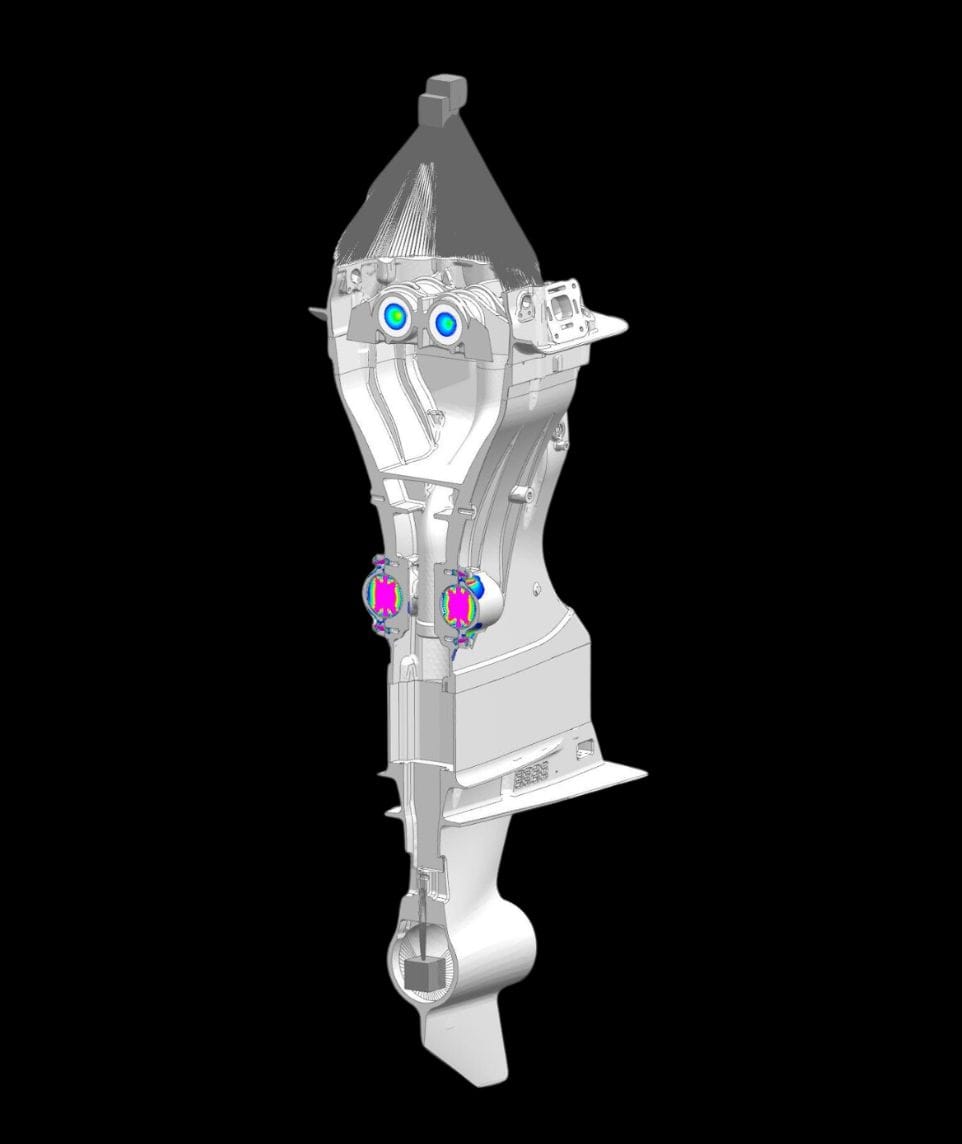
Our team conducted a detailed structural contact study using advanced analysis techniques, including static and fatigue analysis, to address the high stresses involved.
Through multiple iterations and careful consideration of non-linear contacts, we successfully optimised the design to meet both safety standards and performance expectations.
The requirement
XYZ Company hired our team to redesign a gimble assembly for a table joint mechanism with the goal of improving its ability to withstand a load of 1600 Nm.
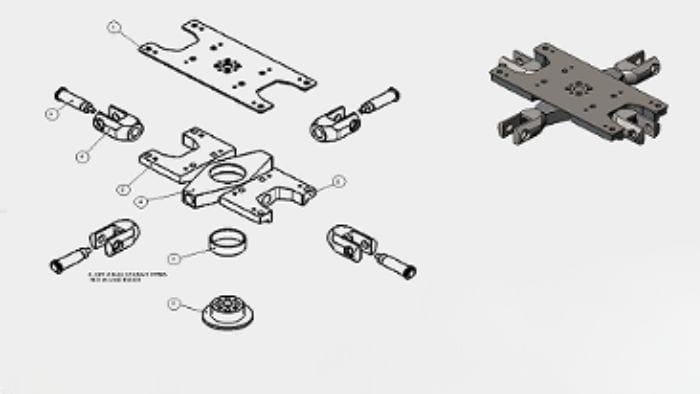
Our analysis of the assembly, which consists of bolted fixings and is constrained by two actuator joints, revealed that the main loading swivelling pins bear the majority of the load.
We performed both a static analysis and a low repetition-high load fatigue analysis on the assembly, which required us to consider non-linear contact due to the presence of multiple contacts with high stresses.
Given the limited land available and the high stresses present, it is important to carefully consider the potential for sharp increases in stress during the design process.
The Process
During the analysis of the gimble assembly for the table joint mechanism, we found that accurately determining the contact model was crucial for the convergence of the analysis.
To address this issue, we set up a small “turn around” model where we could test the transverse loading on a circular cross section bolt. We also encountered challenges related to the inclusion of localized material non-linearities when some of the surfaces in contact underwent high levels of stress.
The moments acting on the gimble assembly could reach 2000 Nm on the top surface, and the bolts played a crucial role in distributing the stress over a limited area. We used finite element analysis to understand the stress field in the critical areas of the gimble assembly.
Our initial design did not meet the required stress safety factor for the joints, so we had to iterate the design three times to reduce the yield stress to the industry standard.
Ultimately, the design was successful, as demonstrated by the static stress analysis and a fatigue stress analysis test. The fatigue cycles were limited, but the load was elevated, and the results of the third redesign showed that the moment applied needed to remain within 2100 Nm in order to ensure an infinite life for the component.
The outcome
The initial design met the client’s requirements, but our goal was to optimise both the performance and durability of the gimble assembly.
After several iterations, we successfully reduced stress levels and improved the overall design within two months. The final redesign was completed within four and a half months, achieving the required load-bearing capacity and ensuring the component’s long-term reliability.
The client was highly satisfied with the outcome, and our continued collaboration further emphasised our ability to deliver tailored solutions that exceed expectations.