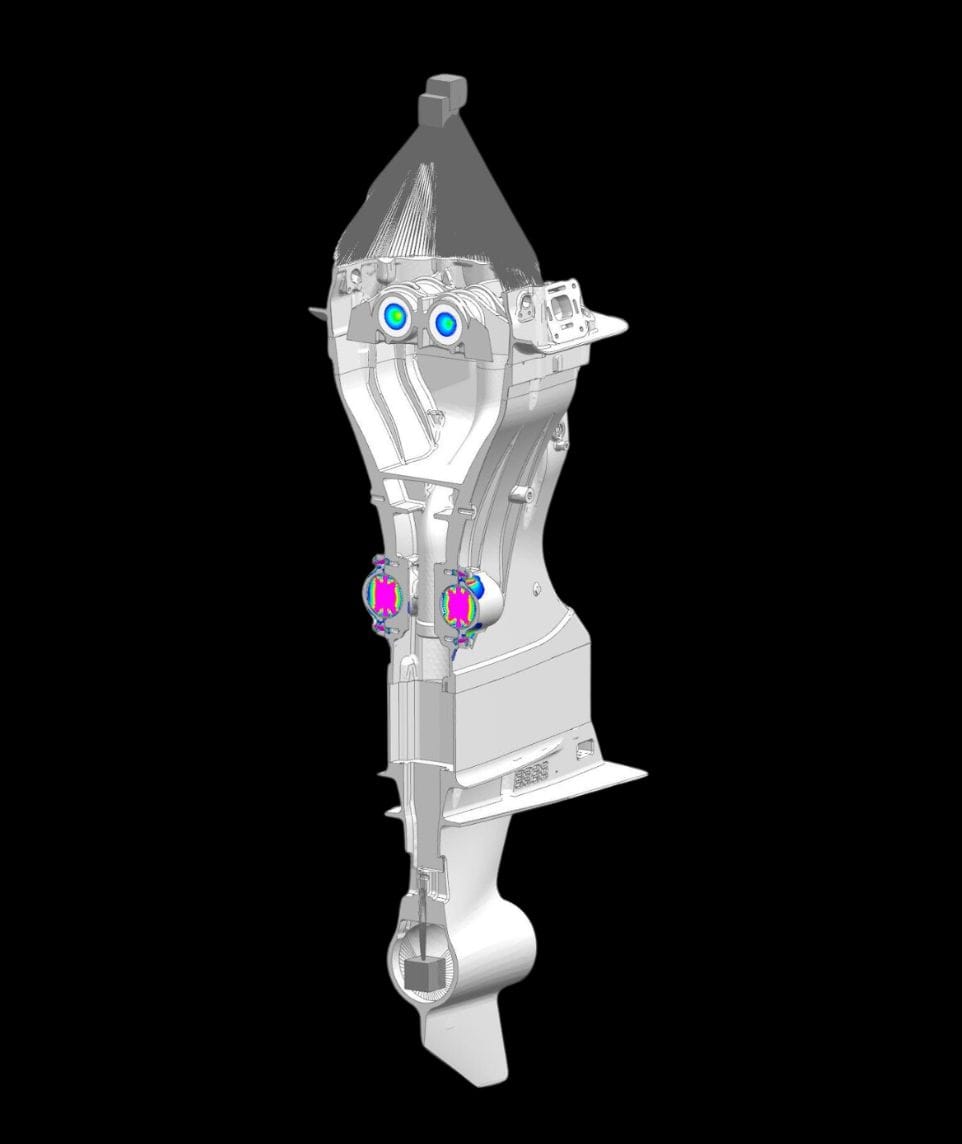
Case Study 4: Thermal Study
In this case study, we outline our approach to designing an optimised insulator for an electronic component.
Our objective was to ensure effective heat dissipation at maximum wattage while maintaining a specific temperature range at minimum capacity. Using the provided heat transfer coefficient, we analysed the thermal field generated by the component and its transfer to the insulator.
Our goal was to meet the client’s requirements and prepare them for future enhancements, including potential CFD boundary studies.
The requirement
XYZ Company has engaged Wide Design Limited to design and specify an optimized material and thickness for the insulator of an electronic component.
The insulator must be able to dissipate all the wattage generated at maximum capacity, while maintaining a certain temperature at minimum working capacity within a specific temperature range.
Wide Design has been provided with a heat transfer coefficient for the transfer system between the insulator and the surrounding environment, though it is understood that a more accurate analysis using CFD boundary studies may be required in the future.
The goal of this project is to understand and optimize the thermal field generated by the electronic component, including how it is transferred to the insulator and through it.

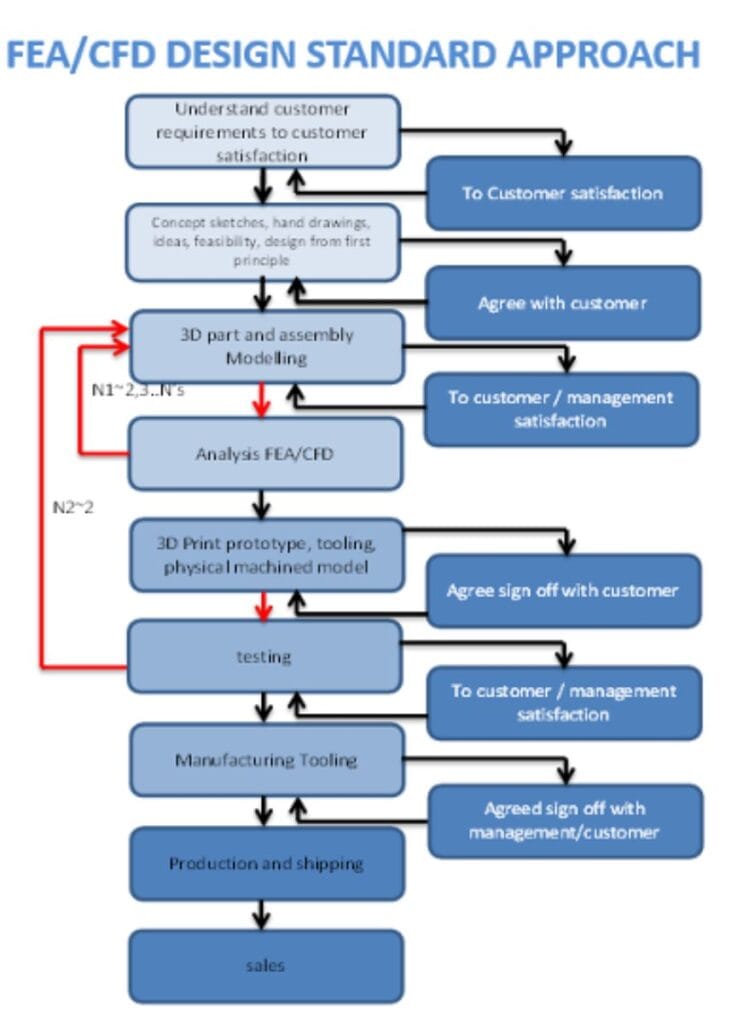
The Process
XYZ Company has engaged Wide Design Limited to design and specify an optimised material and thickness for the insulator of an electronic component. The insulator must be able to dissipate all the wattage generated at maximum capacity, while maintaining a certain temperature at minimum working capacity within a specific temperature range.
Wide Design has been provided with a heat transfer coefficient for the transfer system between the insulator and the surrounding environment, though it is understood that a more accurate analysis using CFD boundary studies may be required in the future.
The goal of this project is to understand and optimize the thermal field generated by the electronic component, including how it is transferred to the insulator and through it.
The process for conducting the nonlinear thermal analysis involved several phases. In the first phase, a non-time dependent heat source with constant heat generation and transfer was simulated and compared to hand calculations and real data until satisfactory convergence was achieved.
In the second phase, a variable heat source was simulated to produce the desired wattage at peak times, and the results were validated against specific time points until satisfactory convergence was achieved.
The third phase focused on optimisation. A time-dependent heat source was simulated while varying the wall thickness using a shell element mesh construction parameter. Several iterations were required to optimise the material selection.
An optimisation study was then performed to validate the results. In this case, the manual approach was quicker to reach a solution, as the automatic iteration methodology proved more challenging to achieve convergence.
The optimised combination resulted in a wall thickness of 3.4mm and the selection of a specific type of compressed polyurethane as the material. This arrangement allowed for the desired heat dissipation at maximum.
The outcome
We leveraged our expertise in nonlinear thermal analysis to deliver results that not only met but exceeded the client’s expectations. Our team meticulously ensured that all calculations were both effective and precise, resulting in a robust and reliable thermal model. The final output included comprehensive post-processing and detailed spreadsheet analyses, which provided a clear overview of the thermal behaviour of the insulator under varying conditions.
Additionally, we performed a thorough parametric optimisation of the physical properties, allowing us to identify the ideal combination of material and wall thickness to achieve optimal heat dissipation. This optimisation process enabled us to validate our findings and refine our recommendations further.
All insights and findings were compiled into a comprehensive report provided to XYZ Company, equipping them with the essential information needed for informed decision-making. Our commitment to high-quality results ensured that the client was not only satisfied but also well-prepared for any future enhancements, including the potential integration of more advanced CFD boundary studies.